
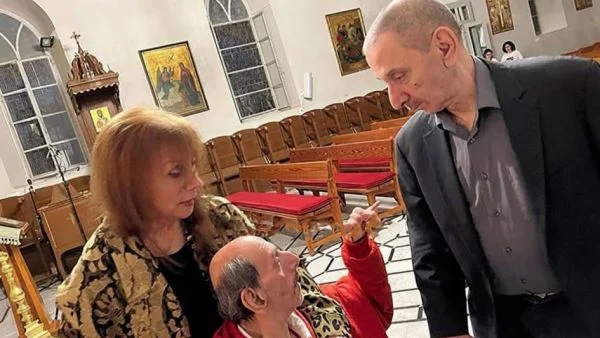
When Fairuz performed for millions across the Arab world, few in the audience knew she was also a mother quietly devoted to a son who would never appear on any stage. That son was Hali Rahbani. His name rarely came up in interviews or cultural commentary, but his place in the family was real and lasting.
When news of his death spread in early 2026, many fans searched for the first time to learn who he was. This article covers what is publicly known about Hali, his connection to Fairuz and Assi Rahbani, the health conditions he lived with, his place among his siblings, and why his passing drew such widespread sympathy.
Who Hali Rahbani Was
Hali Rahbani was the youngest son of Lebanese singer Fairuz, born Nouhad Haddad in 1934, and her husband, composer Assi Rahbani, who lived from 1923 to 1986. He was born in Lebanon in 1958, when Fairuz was around 23 years old.
Unlike other members of the Rahbani family, Hali had no known public career. There are no recorded interviews, no artistic output linked to his name, and no social media presence. Most of what is confirmed about him comes from genealogical records and references in coverage of Fairuz and her family.
He died in early 2026 at the age of 68. Obituaries appeared in regional outlets including The National, The New Arab, and L’Orient Today, which gave many readers their first detailed look at his life.
His Place in the Rahbani Family
Fairuz and Assi Rahbani had four children together: Ziad, Layal, Rima, and Hali. Each of their lives took a very different path.
Ziad Rahbani became one of the Arab world’s most respected composers, playwrights, and pianists. He was widely recognised for both his music and his outspoken commentary on Lebanese society. He died at 69, just months before Hali passed away.
Layal Rahbani was the third child. She died in 1988 at only 28 years old from a brain haemorrhage. Her death was a significant loss for the family at a relatively young age.
Rima Rahbani is a visual artist and filmmaker. After Hali’s death, she became the only surviving child of Fairuz and Assi. She has had a modest public presence over the years, largely connected to her work in the arts.
Hali’s death made him the third of Fairuz’s children to pass away. That sequence of losses, across several decades, gives a clearer sense of how much grief this family has quietly carried.
A Life Shaped by Disability and Family Care
Hali was born with intellectual and physical disabilities. Sources note that his birth in 1958 came at a time when awareness and inclusion for people with disabilities were very limited, particularly in Lebanon and across the broader region.
As he grew older, he lived with paralysis attributed to a childhood bout of meningitis. He spent most of his life using a wheelchair and lived with multiple medical conditions throughout his years. Beyond these confirmed points, detailed clinical information is not part of the public record, and this article does not speculate beyond what sources report.
What sources consistently note is that Fairuz cared for Hali directly within the family home. He lived under her care for most of his life. The L’Orient Today feature about him, titled “Hali, the one who was loved,” describes him as a deeply loved presence within the household, even as the wider world knew almost nothing about him.
Why Hali Stayed Out of Public Life
Multiple news outlets explicitly describe Hali as someone who “lived most of his life away from the public eye.” That phrase is not just an editorial comment. It reflects a consistent family approach to his privacy that held firm across decades.
There are no known interviews with Hali and no public statements connected to his name. He was not part of the public conversations around Fairuz’s career or the Rahbani musical legacy. While Ziad’s work was richly documented and discussed, Hali’s life was intentionally kept separate from that record.
His last known public appearance was at the funeral of his brother Ziad, which drew thousands of mourners. That single appearance in a public setting stands out precisely because it was so rare. It was one of the few times anyone outside the family’s close circle would have seen him.
The absence of information about him is not a gap in the historical record. It reflects a deliberate choice by the family to protect his privacy, and that choice appears to have been respected by the Lebanese media throughout his lifetime.
Fairuz as a Caregiver Behind the Public Image
Fairuz is often called “the soul of Lebanon.” Her voice and her recordings have been a constant presence in Arab households for generations. She is one of the most celebrated singers in the history of Arabic music, and her work with Assi and Mansour Rahbani helped define Lebanese cultural identity across the 20th century.
But alongside that public image was a private reality. Fairuz was also a mother caring full-time for a son with significant disabilities. That role did not diminish as her career grew. By all accounts, her caregiving for Hali continued directly throughout his life.
This is not an uncommon dynamic in the lives of major public figures, but it is rarely discussed openly. Most people who know Fairuz’s music have no image of her as a caregiver. Hali’s story quietly fills in that part of the picture.
The L’Orient Today article about him connects this caregiving context to broader mid-century attitudes toward disability in Lebanon, noting that families of that era often navigated these situations largely without public support systems or widespread social understanding. That framing helps explain not just why Hali’s life was private, but also what his care likely demanded from those around him.
Public Reaction to His Passing
When news of Hali’s death spread in early 2026, the reaction from fans and media was shaped heavily by context. His passing came just months after Ziad’s death, which itself had moved many across the Arab world. The two losses felt close together in a way that amplified the grief around the family.
Social media posts from outlets like Vogue Arabia and Kuwait Times expressed condolences and shared basic details about his life. Comments and reactions largely focused on sympathy for Fairuz and Rima, with many fans noting that Rima is now the last surviving child of Fairuz and Assi.
Readers on platforms like Reddit also made references back to Layal’s death in 1988, situating Hali’s passing within a longer arc of family loss. For followers of Fairuz, each of these deaths has represented a chapter in a story they feel connected to, even from a distance.
Coverage from regional outlets treated the news with care. There was no sensationalism in how his disability or his private life was described. The tone across most reporting was one of quiet respect.
For anyone wanting to follow coverage of Lebanese cultural figures and the stories that surround them, Start Of Biz covers profiles like this alongside broader entertainment and cultural news.
What His Life Adds to the Broader Story
Hali Rahbani was not a public figure in any traditional sense. He did not perform, record, or give interviews. His name does not appear in the history books about Lebanese music or the Rahbani legacy in the way that Ziad’s or Fairuz’s names do.
But his existence adds something important to how we understand the people behind that legacy. Fairuz was not only an icon. She was a woman managing a career of extraordinary reach while also providing long-term care for her son at home. Assi Rahbani was not only a composer. He was a father whose youngest child lived with significant challenges from birth.
Those details do not change what the music meant to people. But they do make the people who created it more fully human.
Hali lived for 68 years, mostly out of sight, cared for and loved within his family. His death in early 2026, coming so close to his brother Ziad’s, reminded many people that behind every celebrated name there are quieter lives, just as real, just as meaningful, and just as worthy of acknowledgment.
Also Read: