
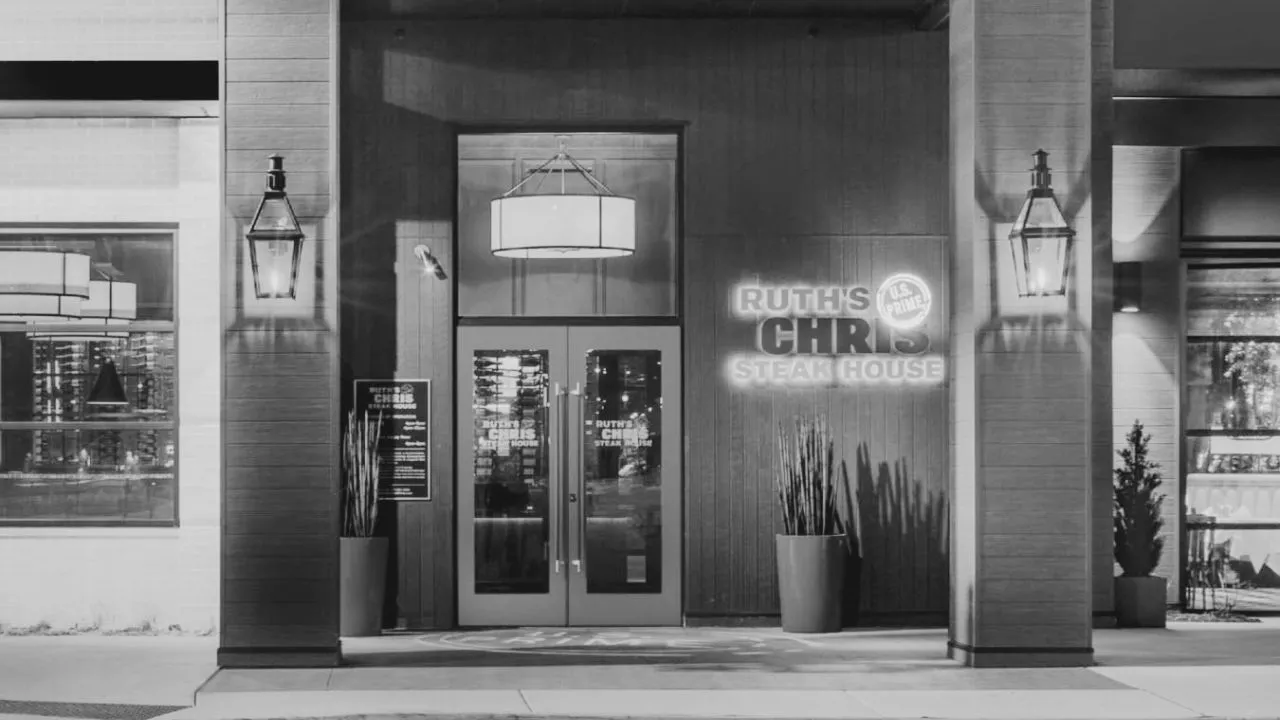
Several Ruth’s Chris locations have shut down recently, and the headlines have caused real confusion. Search traffic for phrases like “is Ruth’s Chris closing” and “Ruth’s Chris going out of business” has spiked. It makes sense — when you see a familiar restaurant close, the first instinct is to wonder if the whole chain is done.
It is not. But the full picture is worth understanding, especially if you want to know whether your local Ruth’s Chris is affected or what is actually driving these closures.
This article covers which locations have closed, why each one shut down, and how to tell the difference between a chain managing its portfolio and a chain heading toward collapse.
Ruth’s Chris Is Not Closing as a Chain
Let’s answer the main question directly: Ruth’s Chris Steak House is not going out of business.
The chain continues to operate locations across the United States, Canada, and Mexico. There has been no bankruptcy filing, no liquidation announcement, and no chainwide shutdown. What has happened is that specific individual locations have closed in specific markets — and that is a very different thing.
Ruth’s Chris is owned by Darden Concepts, Inc. and remains an active operating business. The closures that have drawn attention are location-level decisions, not signs that the brand itself is collapsing.
TheStreet has noted that while some key locations have closed, the chain continues to operate successful restaurants elsewhere. That framing matters — it points to portfolio management, not a company in freefall.
Which Locations Have Closed and When
Here is a straightforward breakdown of the documented closures, based on available reporting:
- Boca Raton, Florida — Scheduled to close in May 2025 after 25 years of operation. The Palm Beach Post reported that the parent company described it as a difficult business decision.
- Midtown Manhattan, New York — Closed in 2023 after approximately 30 years. The closure was tied to a lease that was not renewed, along with weak post-COVID foot traffic recovery in that part of the city.
- Charleston, South Carolina — Permanently closed at that location, as reported by ABC News 4 / WCIV.
- River North, Chicago — Did not reopen after pandemic-era shutdowns and was confirmed permanently closed, according to CBS News Chicago.
These closures happened across several years and several different markets. This was not a single coordinated shutdown event. Each closure has its own timeline and its own set of reasons.
Why Each Location Closed
The reasons vary by market, and that is actually important to understand. There is no single explanation that applies across the board.
Manhattan: Lease and Post-COVID Foot Traffic
The West 51st Street location in Midtown closed after the company chose not to renew its lease. That decision makes sense when you look at what happened to Midtown Manhattan after COVID-19. Office workers were slow to return. Tourist patterns shifted. High-end restaurants in dense urban cores saw some of the weakest recovery numbers of any dining segment.
When foot traffic is down and rent is high, a lease expiration becomes a natural exit point. That is not a sign of brand failure — it is a straightforward financial calculation.
Boca Raton: Local Financial Performance
The parent company called the Boca Raton closure a “difficult decision,” which suggests the restaurant was not performing well enough locally to justify staying. After 25 years at that site, local market conditions had apparently shifted enough that the numbers no longer worked.
Chicago: Pandemic-Era Exit
The River North location was shut during the pandemic and simply never reopened. This pattern was common across full-service restaurant concepts in that period. Chicago’s restaurant recovery was uneven, and some operators made the call that reopening specific locations did not make financial sense.
Charleston: Location-Specific Closure
The Charleston closure was reported as permanent at that specific site. The reporting does not point to a broader corporate problem — it reflects a decision about that particular location.
The bottom line is that each closure reflects local conditions: lease terms, demand levels, post-pandemic recovery pace, and local revenue. None of these individually signal that the chain is in serious trouble.
A Closed Location Is Not the Same as a Closed Chain
This is probably the most important point in the article, and it gets confused constantly in restaurant news coverage.
When a retail store closes one location in a city, the brand still operates everywhere else. The same logic applies to restaurant chains. If a Marriott hotel closes one property in a market, nobody declares Marriott is going out of business. The flag continues to fly at hundreds of other properties.
Ruth’s Chris works the same way. A closure in Boca Raton does not affect a Ruth’s Chris in Houston or Nashville or Toronto. Those are separate business units operating under the same brand.
Upscale restaurant chains regularly exit expensive urban sites when leases expire or when local demand shifts. This is standard portfolio management. The ones that do it well stay profitable by not holding onto locations that no longer make sense financially.
One detail worth noting: employees at some of the closing locations were reportedly offered positions at other Ruth’s Chris restaurants. That is a sign of restructuring, not liquidation. A company shutting down entirely does not offer internal transfers — it just closes.
Conflating “this location closed” with “the company is done” is a common misread of restaurant business news, and it leads to unnecessary panic.
What This Pattern Looks Like for Upscale Steakhouse Chains
Premium casual and upscale dining chains have specific pressures that make location-level cuts more common than in fast-food or fast-casual concepts.
High-end steakhouses depend heavily on:
- Business dining and expense accounts
- Special occasion customers
- Office and corporate proximity in urban markets
- Tourist and hotel foot traffic in major cities
When any of those traffic sources dry up — as happened in Midtown Manhattan after COVID — the revenue model gets stressed quickly. The fixed costs of operating an upscale restaurant are high, and the margins do not absorb prolonged slowdowns well.
At the same time, the brand itself can remain strong in suburban markets, Sun Belt cities, and secondary markets where dining patterns recovered faster and rent is lower. Closing a flagship urban site does not mean the brand has lost relevance — it often means the brand is being realistic about where it actually performs well.
If you follow restaurant industry news, you will see this pattern regularly across upscale chains. They enter expensive markets during growth periods, and they exit those markets when the math stops working. The ones that manage this process intentionally tend to survive. The ones that hold on too long in underperforming markets often end up in actual financial distress.
For anyone tracking business strategy in the restaurant sector, StartOfBiz covers these kinds of operational and market-level decisions in practical terms that are useful for managers and operators.
How to Tell If a Chain Is Actually in Trouble
Since this question comes up often, here are the real signals that a restaurant chain is heading toward serious problems — not just managing locations.
- Bankruptcy filing: This is public information and gets reported immediately. Ruth’s Chris has not filed for bankruptcy.
- Chainwide shutdown announcement: When a company is truly closing everything, the announcement covers the whole company — not individual markets.
- Vendor payment problems or supply issues: These show up in trade reporting and point to cash flow problems across the organization.
- No employee transfers offered: If a company is liquidating, it does not move employees to other locations. The transfer offers at closing Ruth’s Chris sites suggest the opposite is happening.
- Leadership statements about brand viability: Corporate communications that express uncertainty about the brand as a whole are a red flag. That has not happened here.
None of these signals are present in the Ruth’s Chris situation. What is present is a series of market-specific closures spread out over several years — which is a normal part of managing a large restaurant portfolio.
Final Takeaway
Ruth’s Chris is not going out of business. Specific locations have closed in Boca Raton, Manhattan, Charleston, and Chicago — each for reasons tied to that local market, not to a company in collapse.
The brand continues to operate across the U.S. and internationally under Darden Concepts, Inc. The closures reflect lease decisions, post-COVID recovery challenges, and local demand shifts — not a chainwide failure.
If your nearest Ruth’s Chris is still open, it is still open. If it closed, that was a local decision. The two things should not be confused, and now you have the context to tell the difference.