
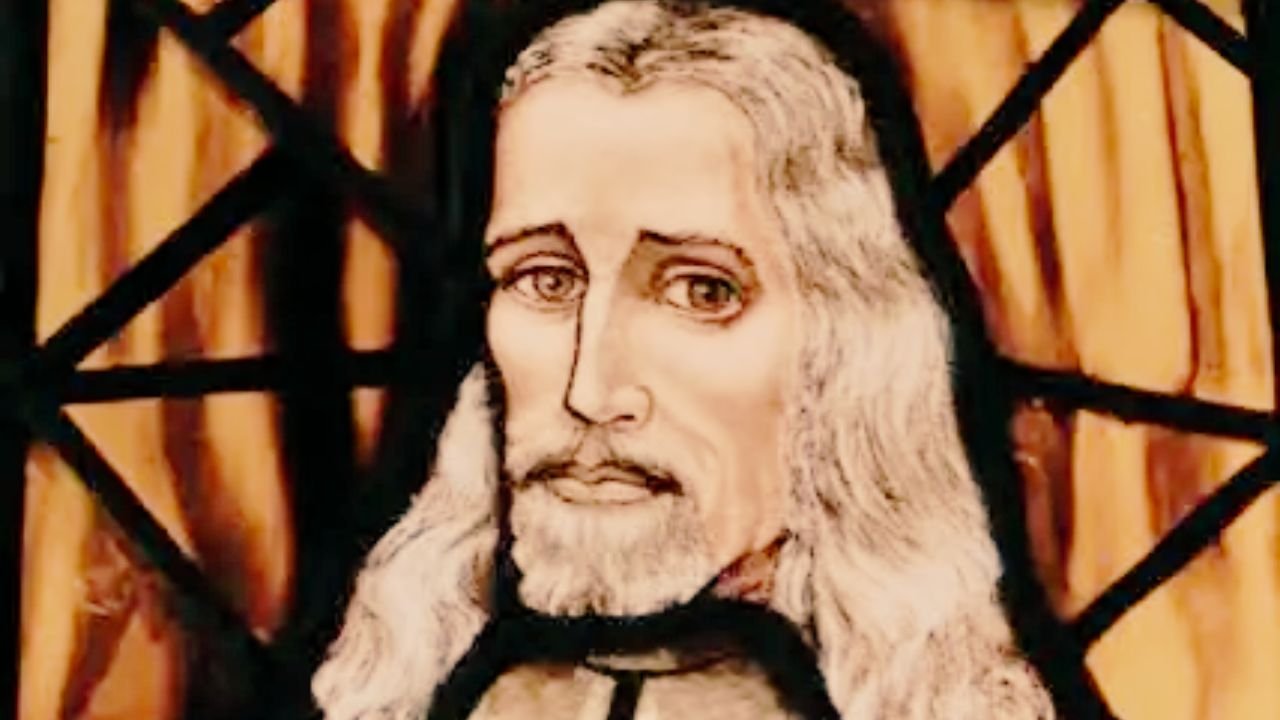
Many people first encounter the name “Oliver Plunkett” not in a history class, but through a DNA result or an online family tree hint. Suddenly, a notification appears suggesting a possible connection to one of Ireland’s most significant historical figures. It raises an obvious question: who exactly was Oliver Plunkett, and what does a suggested link to his family actually mean?
This article covers the life and background of St Oliver Plunkett, the family that shaped him, and how modern genealogy tools are connecting people to his story — for better or worse.
Who Was St Oliver Plunkett?
St Oliver Plunkett was born on 1 November 1625 in Loughcrew, County Meath, Ireland. He came from an established Norman-Irish Catholic family with deep roots in the Meath and Louth region.
He went on to serve as Archbishop of Armagh and Primate of All Ireland — the most senior Catholic role in Ireland at the time. This was during a period of intense anti-Catholic persecution, which made the position both spiritually important and genuinely dangerous.
In 1678, he was caught up in the hysteria surrounding the so-called “Popish Plot” in England. He was arrested, moved to London, and tried for high treason. The charges were widely considered unjust, even by many Protestant observers at the time. He was convicted and executed at Tyburn on 11 July 1681 — hanged, drawn, and quartered.
His story did not end there. He was beatified in 1920 and canonized as a saint in 1975. He is recognized as one of the last Catholic martyrs to be executed in England. His preserved head is kept at St Peter’s Church in Drogheda, where it remains a significant site of pilgrimage. The Archdiocese of Armagh holds annual commemorations in his honor.
The Plunkett Family of Meath and Louth
To understand Oliver Plunkett, you need to understand the family he came from. The Plunketts were not a minor household name. They were a Norman lineage that had been settled in Ireland for at least three centuries before Oliver’s birth.
They were wealthy, land-owning Catholic gentry with strong ties to Irish political and religious life. During one of the most critical periods in Irish history, members of the Plunkett family were involved in the Confederation of Kilkenny — a governing body formed during the 1640s that attempted to unite Irish Catholic interests during a period of upheaval.
This prominent background directly shaped Oliver’s life. In 1647, he traveled to Rome with Father Scarampi, a papal representative, to begin a long period of study and work there. Without the family’s connections and standing, that path likely would not have been open to him.
Other Plunkett branches — barons, knights, and titled lines — appear across Meath and Louth in historical records. The surname carried real weight in medieval and early modern Ireland. That weight is part of why so many people today are curious when the name surfaces in their ancestry results.
It is also worth noting that the given name “Oliver” repeats across generations in this family. Genealogy forum discussions mention an earlier Oliver Plunkett born in 1527 — a completely different person whose father was Sir Edward Plunkett of Rathmore. This is a reminder that the name “Oliver Plunkett” does not always refer to the saint, and careful source checking matters when tracing these lines.
Why the Name “Oliver Plunkett” Appears in Genealogy Searches Today
DNA testing services and family tree platforms like MyHeritage and Ancestry regularly surface hints suggesting users may be connected to St Oliver Plunkett. For many people, this is their first real introduction to him.
The appeal is understandable. Finding a canonized saint in your family tree is not something you expect to see on a Tuesday afternoon. It sparks genuine curiosity, and it often motivates deeper research into Irish Catholic heritage.
When a living or recent person named “Oliver Plunkett” appears in a family tree, it is usually because that person’s line has been connected — accurately or not — to the saint’s broader family network. Public sources contain almost no independent biographical information about modern individuals sharing this name. The historical figure dominates every search result, which is itself informative: the name functions as a genealogical landmark more than a contemporary public identity.
Online trees on Ancestry contain numerous Oliver Plunkett and Plunket entries, including barons of Louth and other titled branches. These hints are useful starting points. They are not, however, verified proof of a direct family connection. Many of these trees are user-submitted and can contain merged or inaccurate entries that require careful cross-checking against original records.
What DNA Projects Reveal About Plunkett Family Connections
If you are a male with the Plunkett surname and want to investigate a possible connection to St Oliver Plunkett’s family line, genetic genealogy offers a practical starting point.
The FamilyTreeDNA Plunkett Surname Project states clearly that a plurality of Plunketts are probable Meath/Louth Plunketts and are likely related to St Oliver Plunkett. The project uses Y-DNA testing alongside documented pedigrees to cluster participants and identify shared paternal ancestry.
Men in the R1b haplogroup — common among those with Western European and Insular Celtic roots — often appear in these clusters. This genetic profile is consistent with what one would expect from Norman-Irish lines settled in Meath and Louth over many centuries.
However, it is important to be clear about what DNA evidence can and cannot do. Matching a haplogroup cluster gives supporting evidence of shared ancestry. It does not prove you are a direct descendant of the saint himself. That requires documentary genealogy — parish records, land records, civil registration, and ideally corroboration from multiple independent sources.
How to Responsibly Investigate a Claimed Connection
If a family tree hint suggests you may be connected to the Plunkett family of Meath or Louth, here are some sensible steps:
- Identify your closest documented Plunkett ancestor and work backwards from there using civil and parish records.
- Compare your line against known Meath/Louth Plunkett trees in reliable published sources rather than relying solely on user-submitted online trees.
- If you are male with the Plunkett surname, consider joining the Plunkett Surname Project at FamilyTreeDNA to see if your Y-DNA places you in the Meath/Louth cluster.
- Treat any “celebrity ancestor” hint as a research lead, not a confirmed fact.
Documentary evidence from the 17th century and earlier can be incomplete or missing entirely, especially for Irish families who lived through periods of war and land disruption. Exact descendant lines are genuinely difficult to prove. That does not mean the connection is false — it simply means the research requires patience and reliable sources.
Sharing a Name With History
For anyone who carries the Plunkett surname today, the connection to St Oliver Plunkett is less about proving direct descent and more about understanding a shared heritage. The Plunkett family of Meath and Louth was large, well-connected, and influential across several centuries. Even if you cannot trace a straight line back to the saint himself, you may well belong to the same extended family network — something similar to sharing a clan name in Scotland or a noble house in medieval Europe.
At Start Of Biz, we believe that understanding the historical figures behind famous names adds real depth to how we read ancestry results — and how we tell those stories responsibly.
St Oliver Plunkett remains a genuinely significant figure: an Archbishop who reorganized a struggling church under dangerous conditions, a martyr whose execution was widely seen as unjust even at the time, and a canonized saint whose relics still draw visitors to Drogheda today. His family name carries centuries of Irish, Norman, and Catholic history within it.
If his name has appeared in your family tree, that is a story worth exploring carefully — with good records, reliable sources, and a clear understanding of what the evidence can reasonably support.
Also Read: