
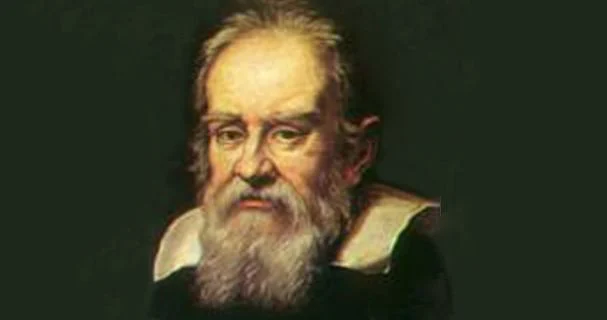
Many people come across the name “Vincenzo Gamba” while tracing family trees on genealogy sites. What surprises them is what they find next — a direct family link to one of history’s most celebrated scientists, Galileo Galilei.
This article explains who Vincenzo Gamba was, why his name appears in different forms across records, and what we actually know about his life. It also covers his family background, his legitimation, his talents, and his relationship with his famous father.
The Name “Vincenzo Gamba” and Why It Causes Confusion
First, a quick note on identity. Vincenzo Gamba and Vincenzo Galilei junior are the same person. He appears under both names in historical and genealogical records, which is one of the most common points of confusion when people search for him online.
The surname “Gamba” comes from his mother, Marina Gamba. “Galilei” was his father’s family name. Genealogy platforms handle this differently — Geni lists him as “Vincenzo Galilei (Gamba),” while MyHeritage records him as “Vincenzo Gamba, born 1606, Padua.” Neither is wrong; they simply reflect different conventions.
There is also a generational mix-up worth avoiding. Galileo had a father named Vincenzo Galilei — a noted music theorist from the 16th century. That is a completely different person, one full generation earlier. The chain goes: Vincenzo Galilei senior (Galileo’s father) → Galileo Galilei → Vincenzo Gamba (Galileo’s son). Keeping that order clear helps avoid a lot of confusion.
One more thing: there is an unrelated 19th-century man also named Vincenzo Gamba — a blacksmith from Bellagio, in the Como region of Italy. He has no connection to Galileo’s family whatsoever.
Galileo, Marina Gamba, and the Family Born in Padua
Galileo Galilei (1564–1642) spent roughly 18 years teaching at the University of Padua. During that time, he met a Venetian woman named Marina Gamba. She eventually moved into his home in Padua, though the two never married.
Together, they had three children. Virginia was born on August 16, 1600, and later became Sister Maria Celeste. Livia followed in 1601 and entered religious life as Sister Arcangela. Vincenzo was born last, on August 22, 1606, also in Padua.
All three children were born outside of wedlock. This was not an unusual situation for the period, but it carried real consequences. For the two daughters, illegitimacy severely limited their marriage prospects. Galileo eventually placed both girls in the Convent of San Matteo in Arcetri. This was partly a practical decision — arranging legitimate marriages for illegitimate daughters required significant dowries and social maneuvering that Galileo was not positioned to manage.
Vincenzo’s situation was different. His father chose a different path for him, one that required a formal legal step.
What Legitimation Meant for Vincenzo
In early-modern Italy, being born outside of marriage was not just a social stigma. It had legal teeth. Illegitimate children were barred from certain careers, public offices, and civic roles. For a father who wanted his son to have real opportunities, this had to be addressed.
Galileo arranged for Vincenzo’s legitimation in the late 1610s. Sources differ slightly on the exact year — some cite 1618, others 1619 — so it is safest to place it in that window. According to records on Geni, the legitimation was carried out by intercession of the Grand Duke of Tuscany. That detail matters. It reflects how well-connected Galileo had become as a court philosopher and mathematician to the Medici family.
Think of legitimation as roughly comparable to a modern formal legal recognition of parentage — except the stakes in 17th-century Italy were higher. Without it, Vincenzo could not have pursued law or held certain positions that were closed to those of illegitimate birth. With it, he had a recognized social standing and could eventually marry without legal complications.
His sisters received no such legitimation. Their path to the convent was shaped, at least in part, by those same social realities. The contrast between Vincenzo’s future and his sisters’ is a telling example of how gender and circumstance shaped lives in that era.
Education, Talents, and a Family Thread of Music and Mechanics
Galileo took an active interest in his son’s education. He encouraged Vincenzo to study law in Pisa, and arranged for him to study under Benedetto Castelli — a mathematician and one of Galileo’s most trusted disciples. That placement alone shows how seriously Galileo took his son’s future.
Beyond law, Vincenzo showed real talent in several areas. Historical accounts describe him as gifted in poetry, music, and mechanics. The most vivid detail comes from Vincenzo Viviani, a younger contemporary who was close to Galileo’s household. Viviani described Vincenzo as an inventor of musical instruments, including a lute built with such craft that it reportedly produced sounds resembling organ pipes.
That detail connects Vincenzo to something larger in his family’s history. His grandfather, Vincenzo Galilei senior, was a respected music theorist who wrote seriously about the theory of harmony and pitch. Galileo himself combined scientific thinking with mechanical ingenuity. In Vincenzo, that same combination of musical and technical curiosity seemed to carry on — not as a scientist, but as a craftsman and inventor in his own right.
There is no evidence that Vincenzo made scientific discoveries or pursued astronomy. He should not be presented as a scientist. His talents were real, but they ran in a different direction from his father’s groundbreaking work.
His Relationship with Galileo: Tension and Reconciliation
The relationship between Vincenzo and his father was not without friction. After Vincenzo married Sestilia Bocchinieri in 1629, financial disagreements arose between them. The details of those quarrels are not extensively documented, but sources from the Institute and Museum of the History of Science in Florence note them as part of the record.
Money was a persistent source of stress throughout Galileo’s life. He supported his sisters’ dowries, managed debts, and dealt with the financial strain of an intellectually demanding but socially complicated career. It is not surprising that those pressures touched his family relationships too.
What stands out, though, is what came later. Despite the earlier tensions, Vincenzo’s relationship with his father improved. By the time Galileo was in his final years — aging, under house arrest after his trial by the Inquisition, and eventually blind — Vincenzo was reportedly present and caring. Accounts describe him as having assisted Galileo lovingly during those difficult last years.
That is a meaningful detail. It suggests the relationship between father and son was capable of repair, and that whatever friction existed did not define it entirely.
Marriage, Descendants, and Why Genealogy Sites Surface His Name
Vincenzo married Sestilia Bocchinieri in 1629. The couple had children, and descendants have been traced under both the Galilei and Gamba surnames through genealogy research. This is largely why Vincenzo appears on platforms like MyHeritage and Geni — people working on their own family trees sometimes find that a branch connects back through him, and from there to Galileo.
For genealogy users, discovering that connection can feel significant. A search for a surname leads to a 17th-century craftsman from Padua, and then — one step up — to one of the most recognized figures in the history of science. It is the kind of discovery that makes historical genealogy genuinely interesting.
If you are tracing your own family history and want to cross-check records carefully, resources like the Institute and Museum of the History of Science in Florence and established genealogy databases are good starting points. For broader context on historical figures and their families, Start Of Biz also covers profiles that help place names in their proper context.
Why So Little Is Documented About His Life
Vincenzo Gamba died around June 25, 1649, at approximately 42 years old. He lived a relatively short life, and the records that survive are sparse. The Institute and Museum of the History of Science in Florence notes explicitly that few documents remain about him.
Most of what we know comes from scholarly reconstructions, genealogical compilations, and brief mentions in accounts centered on Galileo himself. Vincenzo was not a public figure in the way his father was. He did not write treatises, correspond with rulers on matters of science, or leave behind the kind of paper trail that historians can dig into.
That is not a criticism — it is simply the reality of living in the shadow of an extraordinarily documented person. Most people in the 17th century left little behind. Vincenzo left slightly more than most, precisely because of who his father was.
Putting It All Together
Vincenzo Gamba — or Vincenzo Galilei, or Vincenzo Galilei (Gamba) — was Galileo’s only son. He was born in Padua in 1606, the third child of Galileo and Marina Gamba. He grew up outside of wedlock, was later legitimized through the Grand Duke of Tuscany, studied law in Pisa, and showed talent in music and mechanics that echoed his family’s broader creative and intellectual character.
His life was shorter and quieter than his father’s. He had family tensions and later reconciliations. He married, had children, and cared for Galileo in his final years. He is not a figure who changed history, but he is a figure who belonged to it — shaped by the same social forces, family pressures, and intellectual culture that surrounded one of the most famous scientists who ever lived.
Also Read: